

Use the same evidence chain for every customer: read the current shift intelligence, scan the ID, compare the complete database record, verify appearance and exact body side, test occupation and relationship claims, inspect any vehicle, apply special tools, then state one reproducible contradiction before acting.
Randomized customers make memorized answer sheets unreliable. The winning habit is a repeatable investigation loop: turn every new clue into a check, keep routine store work moving during safe gaps, and switch immediately into defense mode when an alert begins.
Build one evidence chain
Start with the database, not a hunch
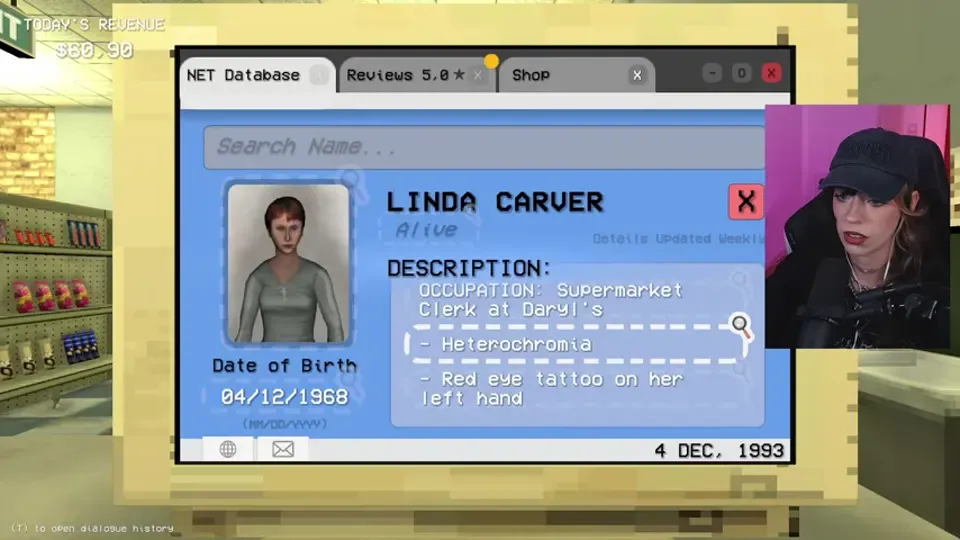
The computer is the fixed authority for a scanned identity. Search the exact name and keep the record open while you compare status, date of birth, occupation, portrait, physical description, habits, and relationships. An odd voice, rude attitude, unusual posture, or nervous movement is a reason to inspect more closely—not a reason to shoot.
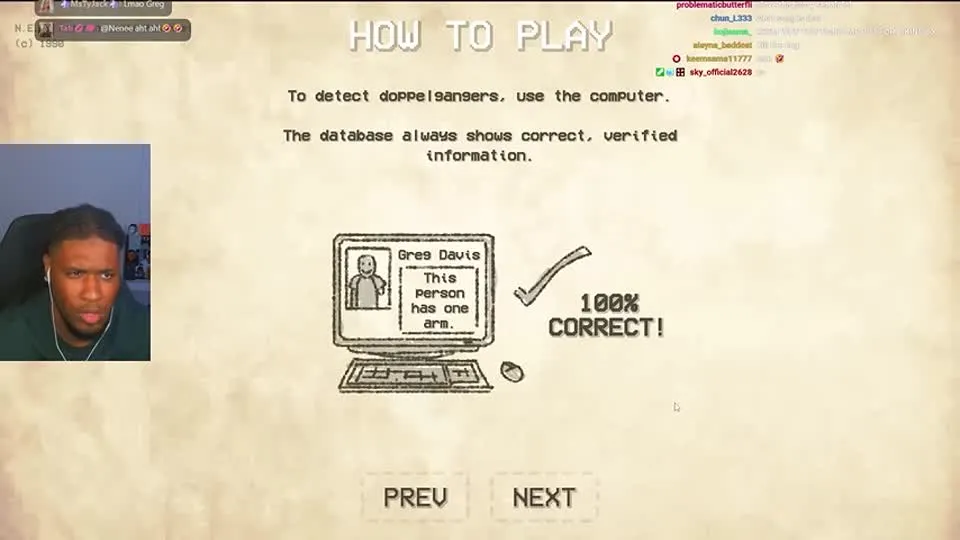
Use this order for every customer:
- Read tonight's board, newspaper, calls, email, and new tool note.
- Scan the ID and search the exact database profile.
- Compare alive/deceased status, age, portrait, and physical traits.
- Ask about occupation, appearance, habits, and named people.
- Search relatives or coworkers mentioned in the conversation.
- Inspect the vehicle if the transaction includes fuel.
- Apply Emote Scope or Anomaly Lens after the ordinary checks.
- State the exact contradiction before rejecting the customer.
This order prevents the most expensive error: collecting several vague suspicions and treating their quantity as proof. One contradiction that can be repeated from the screen is stronger than five impressions.
Convert nightly information into a live test
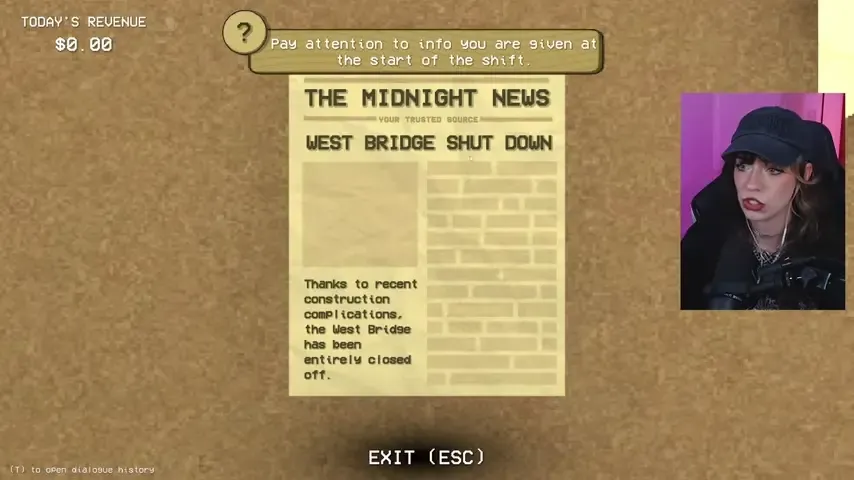
Headlines, road closures, phone warnings, and emails are evidence for the current run. Read them before opening and reduce each message to one sentence you can test. If the newspaper says West Bridge is closed, a customer who insists they just crossed West Bridge has produced a direct contradiction. Do not reuse yesterday's headline or a fact remembered from another playthrough; the shift can present different information.
Compare the whole record before asking questions
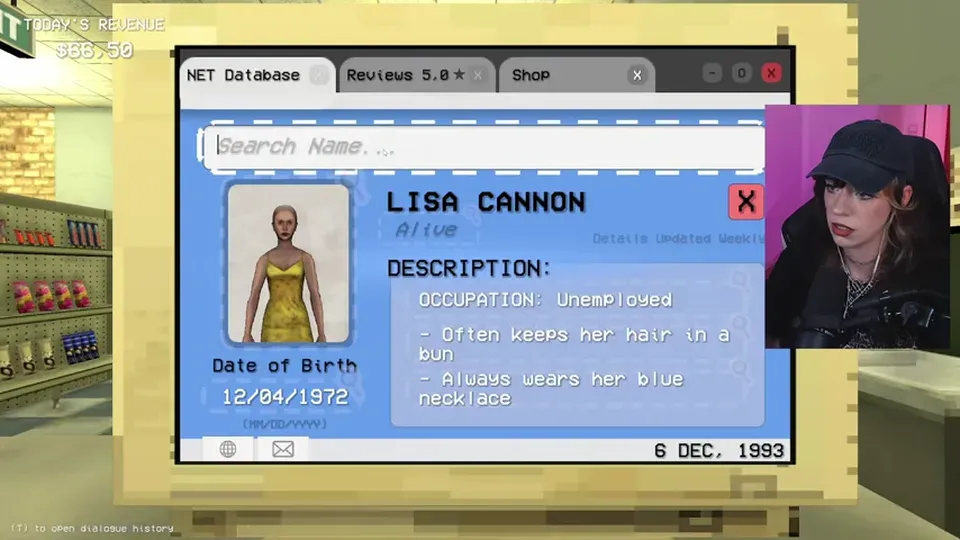
Do not stop after matching the name and portrait. Move field by field: status, birth date, occupation, description, then profile details. Words such as often matter. A record that says someone often wears glasses permits a visit without glasses; it does not permit a different eye color or a newly invented job.
Search every named relative
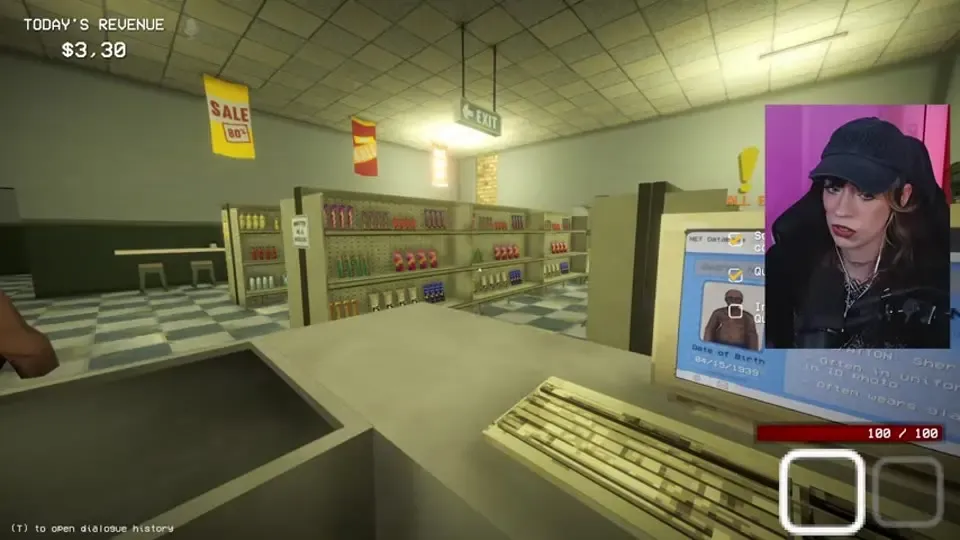
Family stories are unusually efficient checks because they create a second searchable record. If someone names a sister, spouse, child, or coworker, search that person before accepting the explanation. Compare dates of birth as well as surnames: a customer cannot truthfully call a younger relative their twin. A familiar family name is not enough by itself.
Test occupation stories literally
Ask the occupation question and listen for concrete job details. Then compare those details with the occupation field rather than deciding whether the speech sounds confident. A person describing carburetors, engines, and exhaust systems conflicts with a record that lists a different profession, even if the story is fluent. Conversely, awkward speech is not evidence when the facts agree.

Inspect direction, bodies, and vehicles precisely
Treat left and right as separate facts
When a profile names the left hand, right eye, or one leg, move around the counter and inspect that exact side. Do not mentally mirror the customer. If clothing or a bandage covers the named area, ask about it and continue looking for a positive contradiction; hidden evidence is not automatically missing evidence.
The same rule prevents false positives. Louisa's uneven legs are a genuine condition, and a verified human version has a shorter right leg. The warning is there to stop you from treating every asymmetry as inhuman. Compare the exact side and degree described by the record; an impossibly elongated opposite leg is a different observation.

Investigate the driver and the car separately
A fuel request creates two subjects: the person and the vehicle. Ask what fuel they want, use the flashlight on every highlighted compartment, enter the exact plate in the outdoor registry, and compare registration, type, color, modifications, and ownership explanation. Only pump the requested amount after both chains agree.
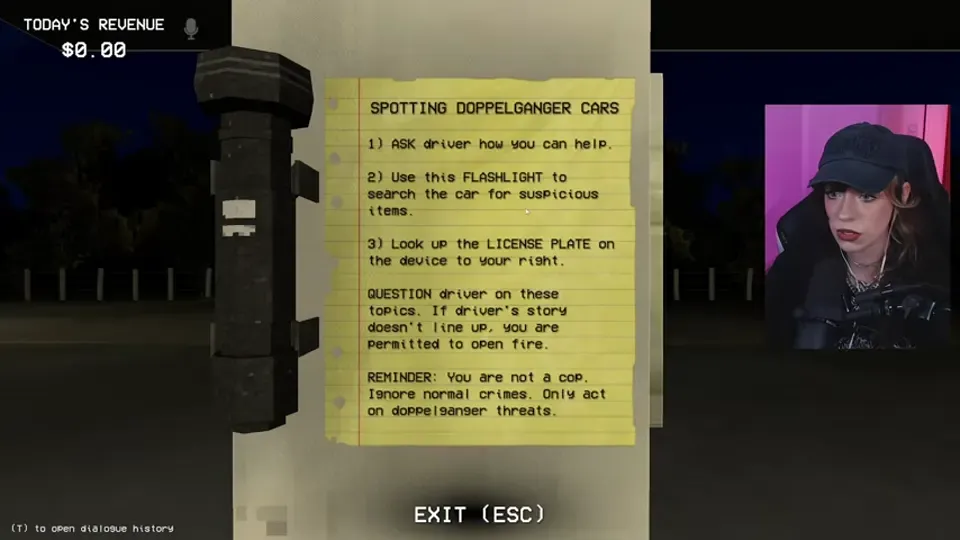
Cash, weapons, alcohol, or other suspicious cargo can indicate ordinary crime without proving a doppelganger. Act on impossible anatomy, a plate mismatch, a registration contradiction, or a false ownership story—not on the mere fact that the trunk looks illegal.
Protect revenue without losing the investigation
Use walking time as your restock window
Start the shift by completing required cleanup and a first shelf pass. During the queue, restock while a customer walks to the counter or while another player performs a check. Stop stocking as soon as it would make you miss dialogue, theft, a phone call, or the final decision. Near closing, clear remaining messes and empty shelf gaps before boarding the bus so preventable penalties do not erase the night's income.
Quota is a result of several small disciplines: correct customer decisions, completed transactions, stocked products, timed manager jobs, and clean closing. Do not risk a human life for a few seconds of shelf work, but do not stand idle while the floor is safe either.
Buy capacity before cosmetics
Purchase for the next failure point. A backpack or inventory upgrade prevents objective runs from stalling when a required item cannot be collected. A security scanner helps catch theft. Planks and traps create defense routes. Health and suitable weapons preserve recovery options. Decorations should wait until required capacity and survival tools are covered.
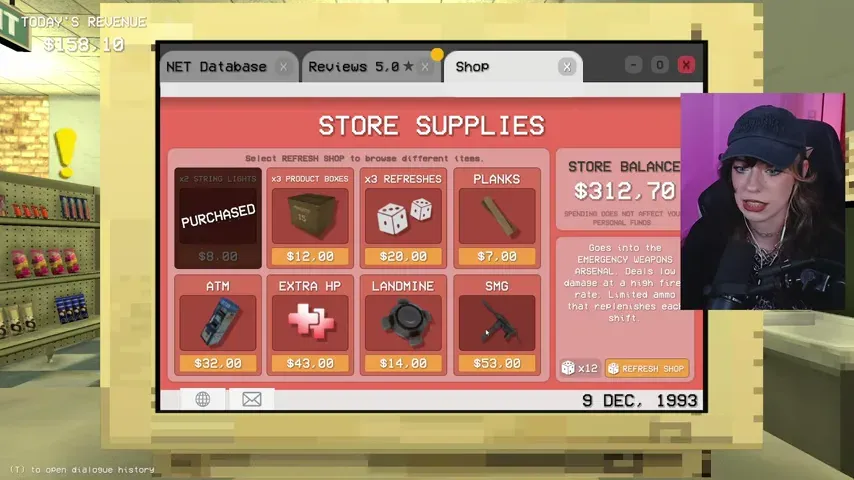
Keep at least one inventory slot free before leaving the store for a collection objective. Stage rarely used items in a memorable place near the counter or storage room instead of carrying everything. During a defense countdown, an item in your backpack is only potential; a trap is useful only after it has been placed, and a plank is useful only after it has been applied to a door.
Treat stealing as a store event, not identity proof
The security scanner can identify a thief and let you demand the items back. Theft can be committed by a human, so recover the merchandise and then complete the ordinary identity chain. Never convert “caught stealing” into “confirmed doppelganger.”

Understand what each tool cannot prove
Emote Scope: an extra question, not a clearance stamp
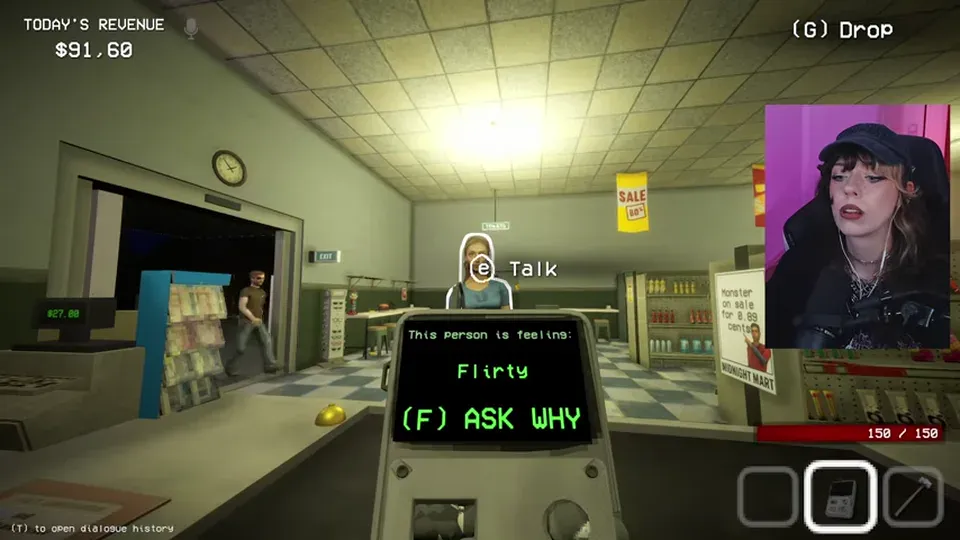
The Emote Scope reads the current emotion and unlocks a matching question. An impossible result such as Craving Human Flesh is powerful evidence, but an ordinary result such as Flirty, Tired, or Exhausted does not clear the customer. Some doppelgangers can reproduce normal human emotion, so finish the database, appearance, relationship, and nightly-fact checks.
Anomaly Lens: compare two views
First look directly at the customer and establish a baseline. Then raise the Anomaly Lens and compare the same face and body. A visible difference between direct sight and the Lens is decisive. If both views match, that only means the Lens found no anomaly; the customer can still fail a database, dialogue, relationship, or vehicle check.
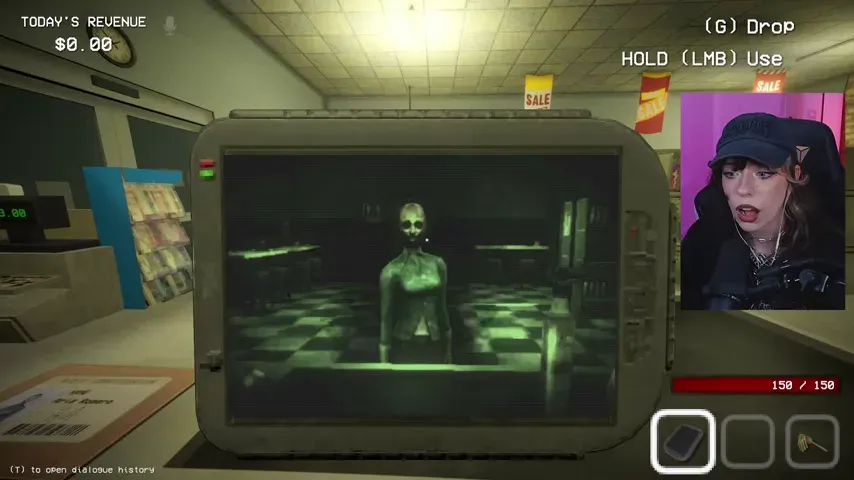
Turn the 60-second warning into a defense plan
The moment the red alert appears, stop shopping, mopping, and restocking. The countdown is not spare working time. Collect the correct weapons, place traps on routes an attacker must cross, barricade exterior doors, choose cover, and keep a clear retreat path.
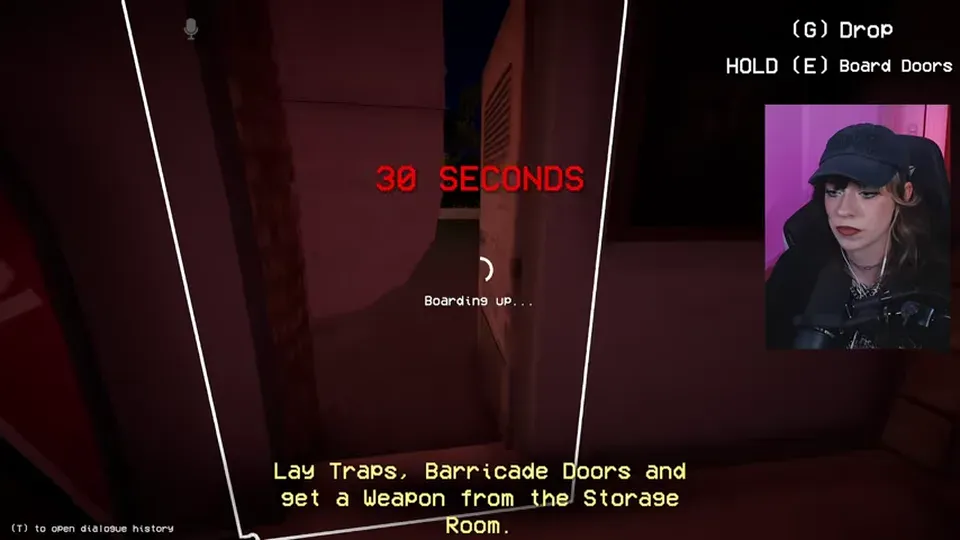
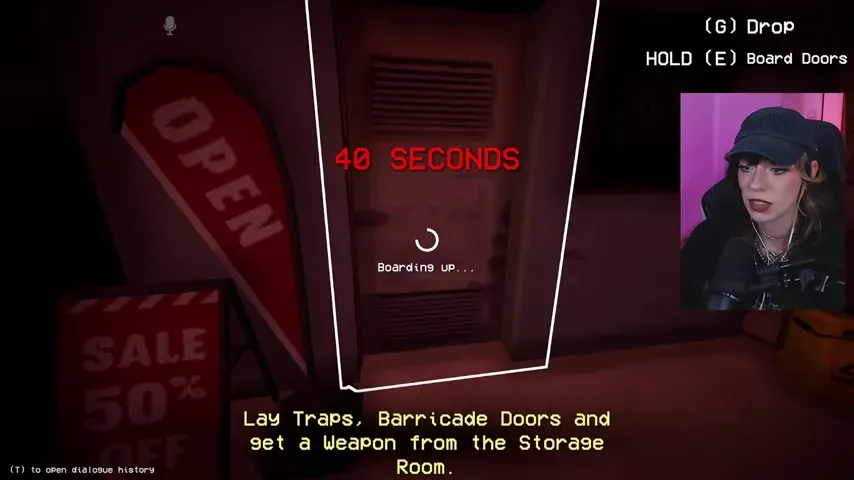
Build a lane rather than scattering traps. Put one trap on the approach, keep your firing position behind it, and identify where you will reload or heal. If an arsenal is temporarily locked, hiding is the survival plan until equipment becomes available. Once the fight begins, wait for the explicit all-clear before returning to routine work.
Counter special enemies with their exact rule
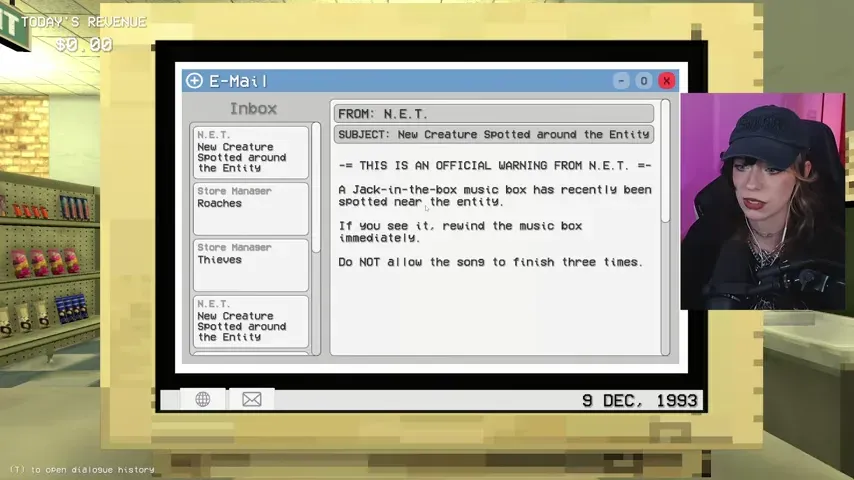
Music box: search by sound and rewind immediately
The Jack-in-the-Box warning has a hard limit: do not allow its song to finish three times. When the event begins, follow the melody, search both sides of doors and the store threshold, and rewind the box as soon as you see it. Do not finish a nearby fight first and assume there will be time afterward.
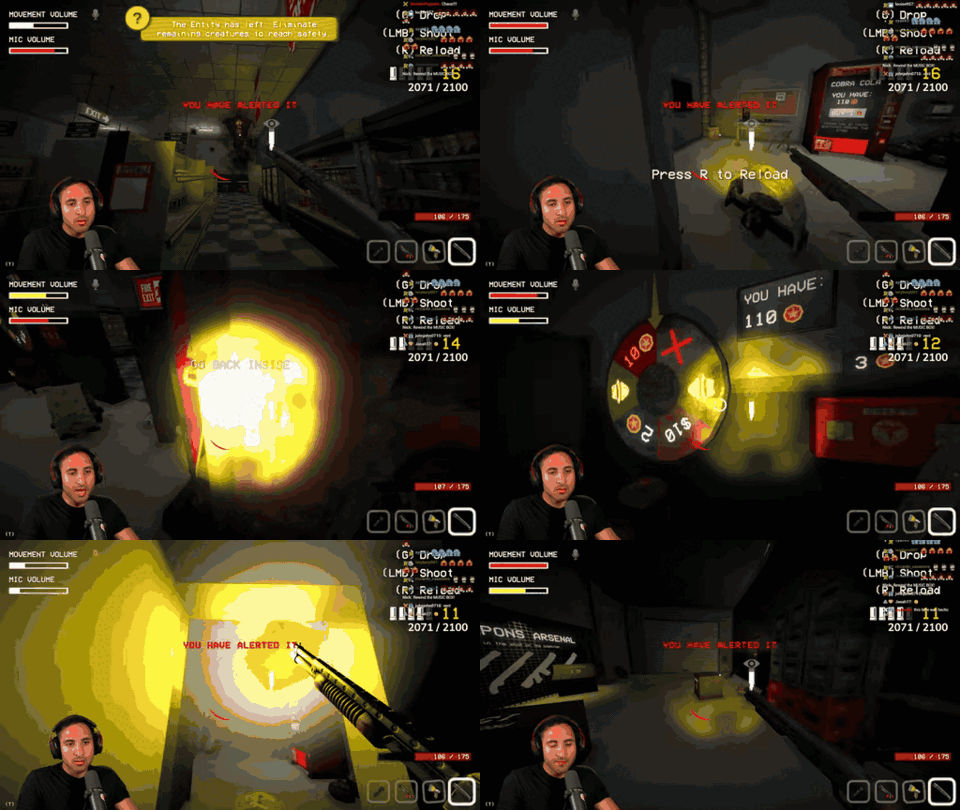
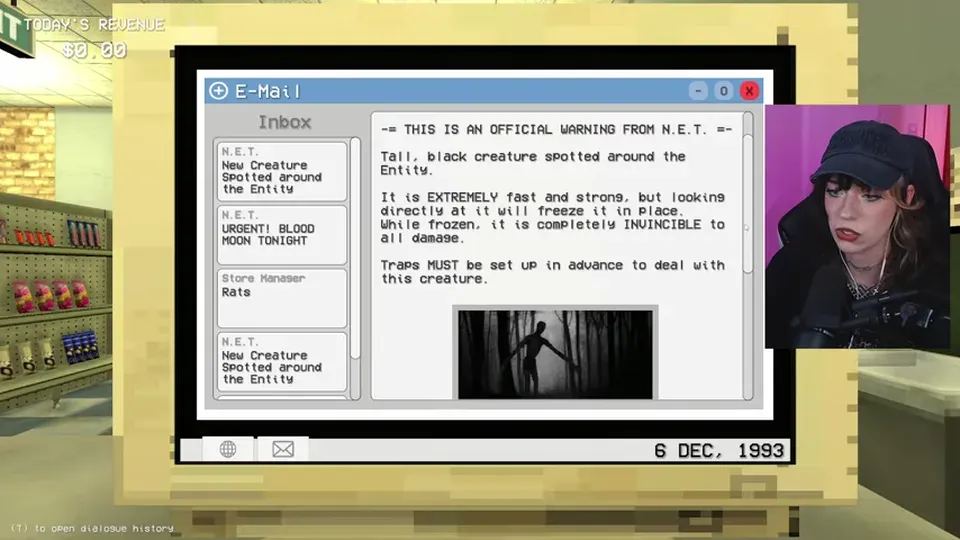
Tall shadow: observation controls movement but blocks damage
Looking directly at the tall shadow freezes it, but the watched creature is invulnerable. Prepare the solution before it arrives: place a trap on a clear approach, face the shadow to halt it, then look away only long enough for it to advance. Look back to stop and realign it. Once it enters the trap, use the immobilized, unobserved window to attack.
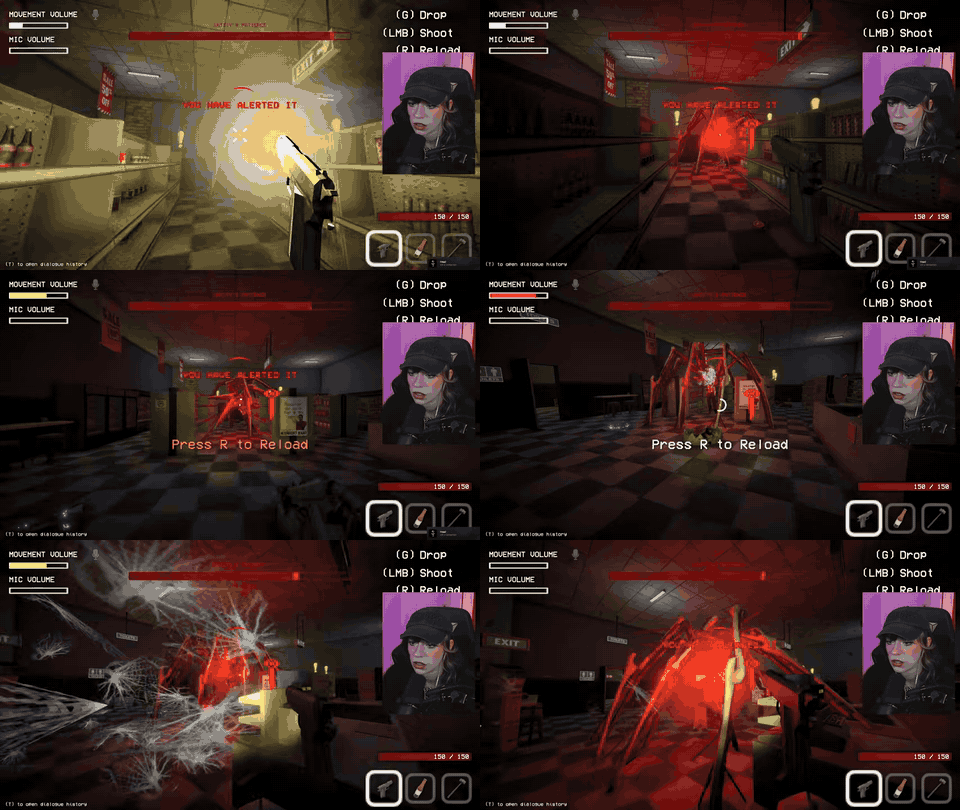
Do not turn your back for several seconds. Short camera movements let you regulate distance. If it escapes the trap, face it immediately, reset the approach, and use another prepared trap rather than firing uselessly while staring at it.
Make solo and three-player runs efficient
Solo: use a spoken checklist
Keep the record open and say each result aloud: name, status, age, job, portrait, traits, nightly fact, tool, decision. This prevents a busy queue from making you forget a completed check. Put the mop, flashlight, and defense gear in consistent places, and finish one customer before beginning another optional task.
Three players: divide authority, not just chores
- Counter lead: owns the ID, database, interview, checkout, and final accept/reject decision.
- Floor lead: owns shelves, cleanup, timed pests, theft response, and delivery staging.
- Security lead: owns nightly messages, vehicles, outside objectives, special tools, barricades, traps, and the defense call.
Use neutral callouts: “record says plumber,” “right leg is shorter,” or “plate does not match.” One player should make the final decision after hearing the chain. Three simultaneous verdicts create duplicated checks and skipped facts; three clearly owned roles make the randomized workload faster without making it sloppier.
Two checklists to memorize
Before the first customer:
- read every current notice, message, and tool instruction;
- finish mandatory cleanup and the first stock pass;
- choose roles and the final decision-maker;
- stage the flashlight, tools, and delivery area;
- buy capacity and survival supplies before decoration.
Before the attack timer reaches zero:
- stop all routine store work;
- take the weapon required by the current warning;
- place traps on controlled approaches;
- board exterior doors;
- identify cover, reload space, and a hiding option;
- restate the special enemy rule so nobody attacks at the wrong time.
Keep going