

Shift At Midnight Night 3 Walkthrough — Rats, Missing Photos, and the Medicine Bill
Read the Dentist report and rat email, remove rating hazards between customers, then scan every ID and verify the database, appearance, answers, and any named person before deciding.
Night 3 objective
Night 3 adds a second job to customer verification: rats run through the store and lower its rating until removed. The two verified runs do not present the same full customer roster or anomaly set, so use the evidence method below rather than memorizing a fixed list of people to shoot.
Your route is: read both opening notices, process each customer from independent evidence, remove rats and messes during safe gaps, clean the store after the final customer, take the bus, and make the $40 medicine choice.
1. Read the Dentist report
Inspect the notice board before serving the queue. The Midnight News reports that The Dentist, an infamous killer buried in Midnight Town 40 years earlier, may have returned as a creature with a similar likeness. This warning explains Ryan's later dialogue, but it does not identify any customer by itself.
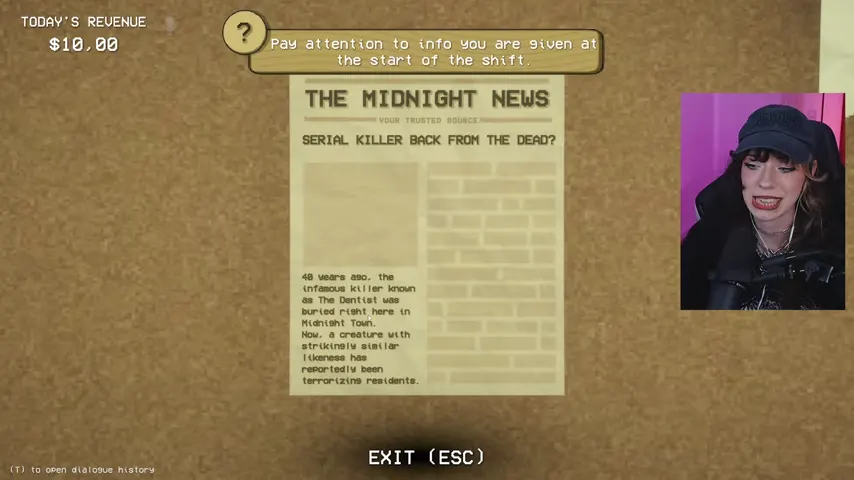
The report establishes the night's threat; it is context, not a verdict on the person at the counter.
2. Read the rat email before the queue builds
Open the counter computer and select the Store Manager's Rats email. It says rats are running rampant, negatively affect the store rating, and should be caught and thrown into the dumpster or disposed of another way. Keep that instruction in mind while interviewing customers, because rats can appear while the counter is busy.
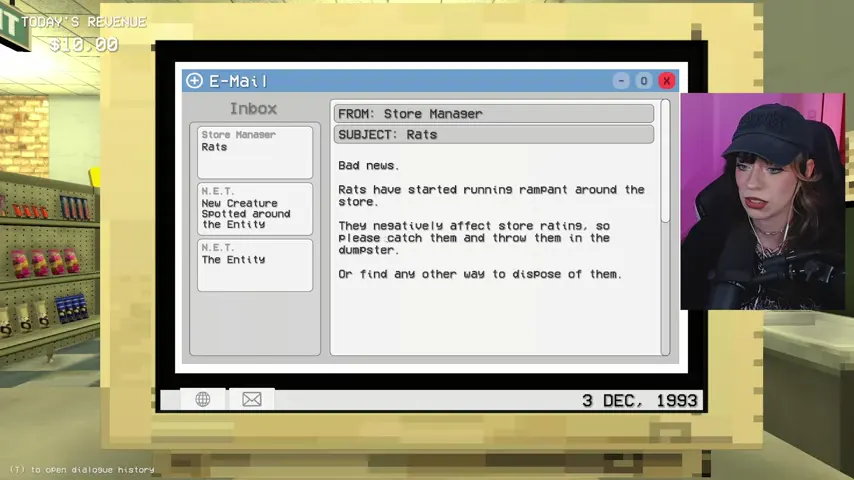
The email explicitly connects live rats to the store rating and names the dumpster as a disposal point.
3. Resolve a missing portrait with the remaining evidence
Scan the ID first, type the exact name if necessary, and open the verified database record. A question-mark portrait means the current record has no comparison image; it does not prove the customer is an impostor. Continue through occupation, date of birth, visible traits, dialogue, and status.
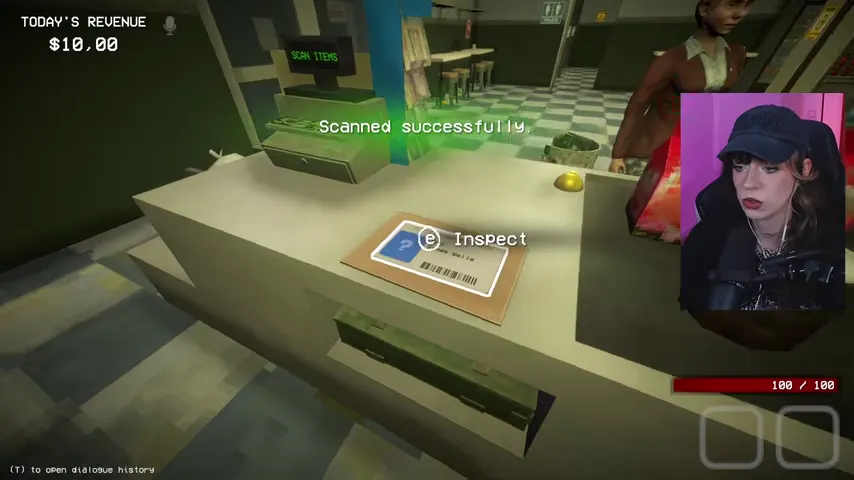
Start from the ID and exact name even when the database portrait is unavailable.
In one recorded run, Agnes Wells's profile was alive and unemployed but showed no portrait and listed 11/16/1990 as her date of birth. The computer date was 3 Dec. 1993, making that record three years old. Agnes appeared elderly and, when challenged, explicitly claimed to be three years old. The combined date, appearance, and answer contradiction justified rejection; the blank portrait alone did not.
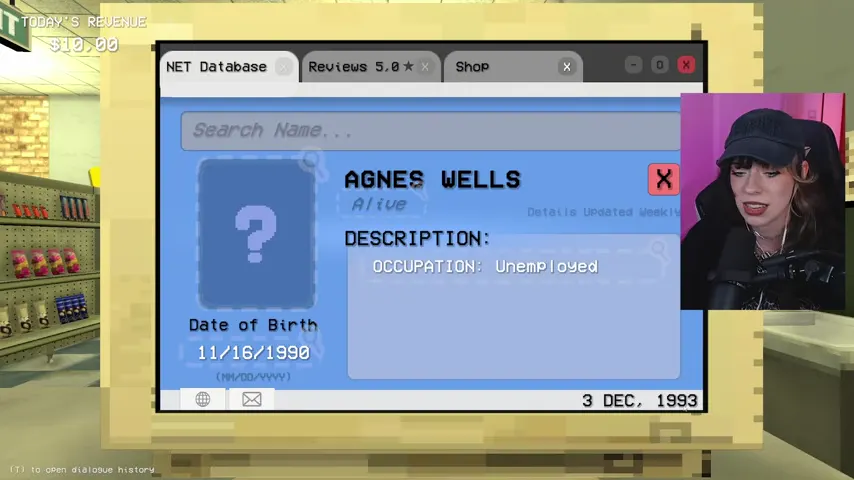
Use the desktop date to test whether the date of birth agrees with the customer in front of you.
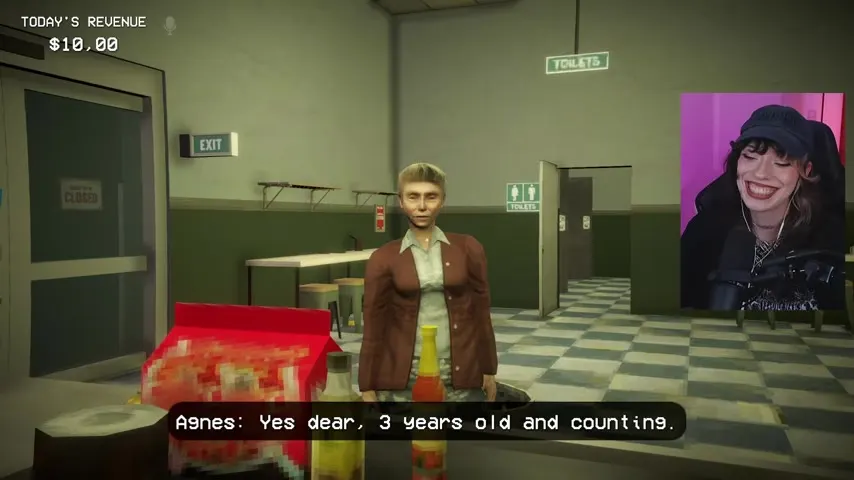
The spoken confirmation completes the contradiction; do not fire merely because the photo is missing.
4. Record Ryan's Dentist warning without overextending it
Ryan says the Dentist-like creature was fast and strong, wiped out his whole squad in seconds, deliberately left him alive, and stood staring at him. This is useful story information about The Dentist. It is not enough to declare a later N.E.T. customer fake unless that customer's own record or answers create a direct conflict.
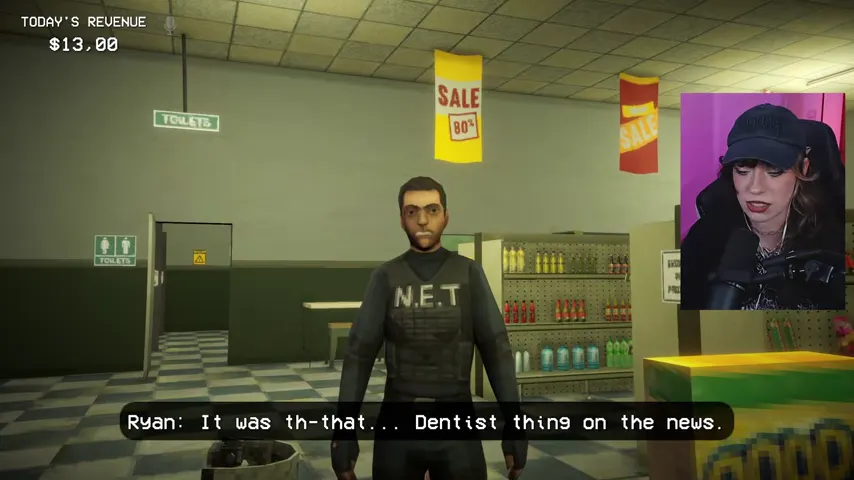
Keep the exact statement in mind, but verify later N.E.T. claims against their own records.
5. Clean between interviews to protect the rating
Night 3 can stack several problems at once: customers drop trash, confirmed impostors leave blood and remains, shelves empty, and rats stay active. After each decision, use the short gap before the next full interview to pick up obvious trash, mop blood, and refill visible shelf gaps. Finish the current customer's evidence check before starting a long optional chore when the counter is already occupied.
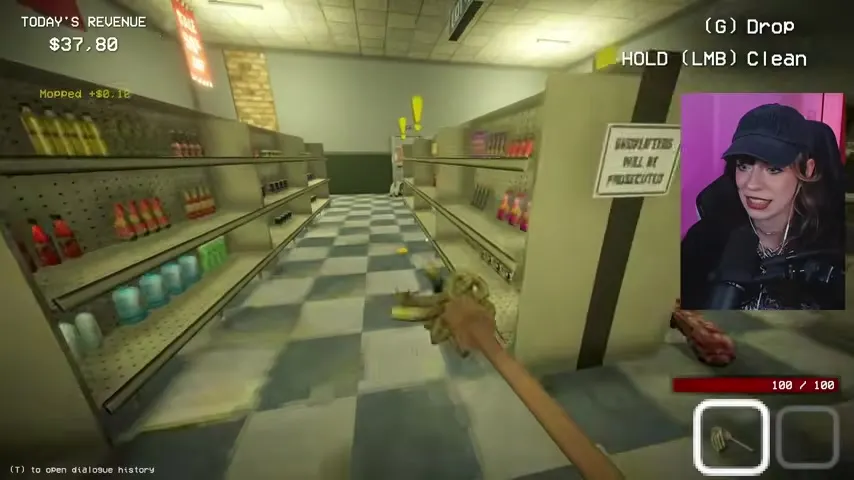
The mop confirmation and visible floor hazard show why cleanup belongs inside the shift, not only at closing.
6. Use the same evidence order on every customer
For every customer, keep this order:
- scan the ID and confirm the exact name;
- open that name's verified N.E.T. record;
- compare the portrait when present, then occupation, date of birth, status, and description;
- inspect the person's head, clothes, limbs, and movement;
- question the relevant occupation, appearance, and visit claims; and
- decide only after a concrete contradiction survives the interview.
An unusual trait can support a customer when the record names it. In one run, Tyler Brackett's verified profile listed him as unemployed and said he often had red eyes. Both his answer and appearance matched those fields, so the red eyes were not evidence against him. In the second run, a different customer claimed to be a computer engineer but answered with car-engine work, showing why the spoken explanation matters as much as the field label.
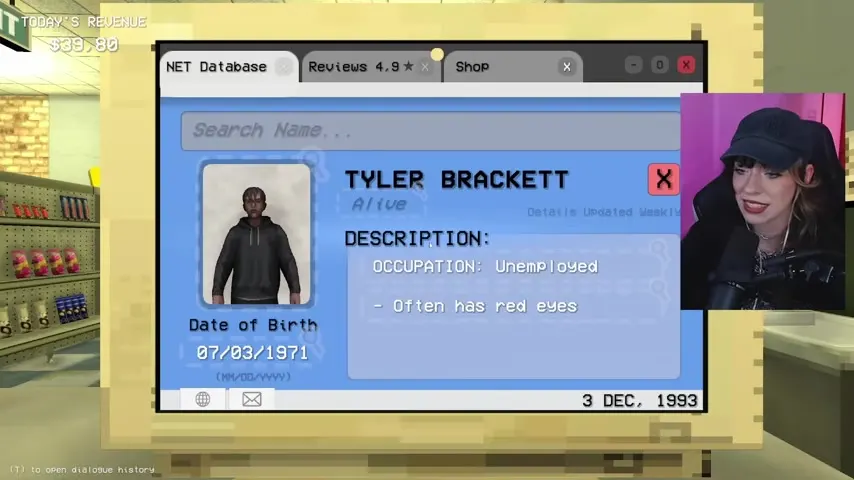
Odd appearance is not automatically hostile when the current verified profile supports it.
7. Treat the Shop tab as randomized optional preparation
Open the Shop tab only during a safe gap. The available products can refresh and vary; the verified run offered items such as impact grenades and extra health while traps were absent. Buy for the next threat rather than expecting a fixed Night 3 inventory. The Shop uses Store Balance and explicitly says purchases do not affect Personal Funds, so these purchases do not consume the separate $40 medicine money.
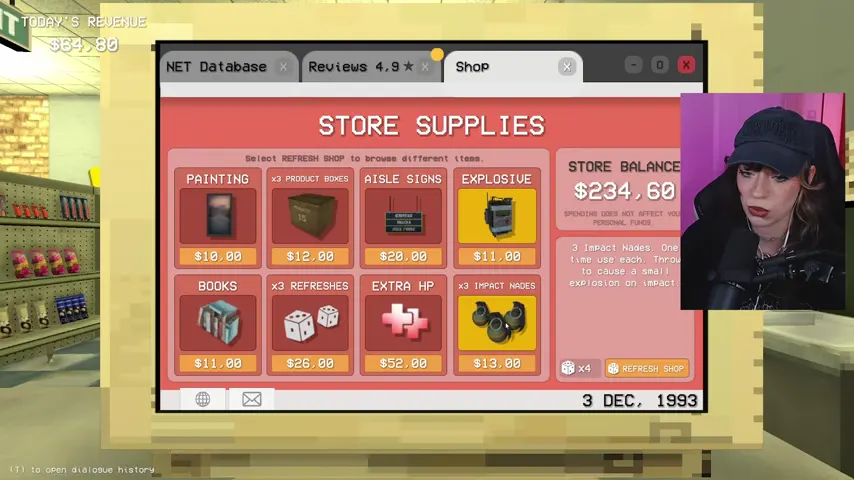
Use the item descriptions and Store Balance; do not confuse store purchases with the later personal-funds bill.
8. Search every named relative before accepting the story
When a customer claims to be shopping for another person, search that person as a second record. In both reviewed runs, Tommy Delgado said he was picking up something for his sister, Catherine. Search Catherine Delgado, not just Tommy.
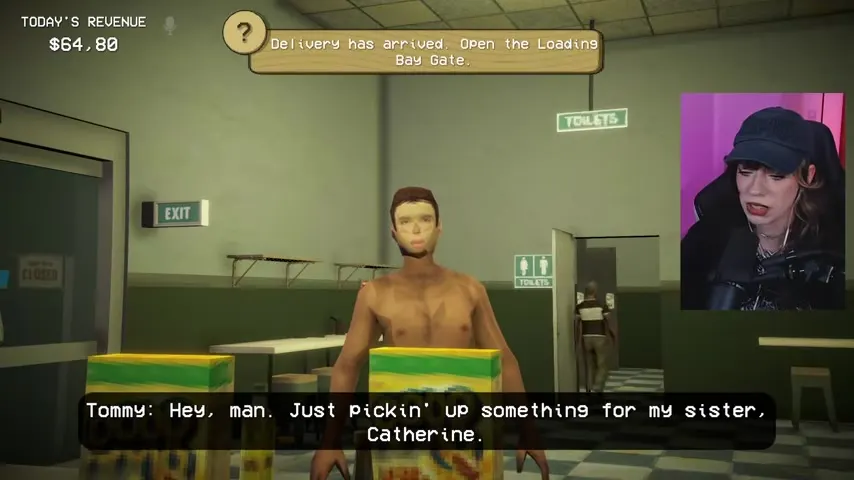
A named relative turns the story into a checkable claim.
The verified Catherine Delgado record showed Deceased with cause of death unknown. Question Tommy about the result. When he cannot reconcile his claim with the verified status, reject him; the deceased record is the decisive evidence, not his clothes or attitude.
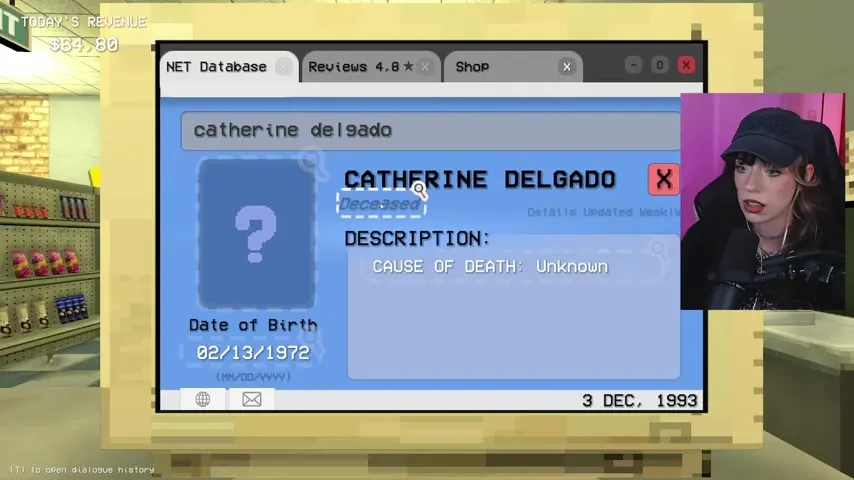
The second record supplies the direct contradiction needed for the decision.
9. Catch rats and take them to the outside dumpster
Watch the shop floor, the toilet corridor, and the route near the entrance whenever the queue pauses. Move close enough to pick up a rat, carry it through the exit, and throw it into the green dumpster outside. Repeat when another rat appears. The manager's email also allows another disposal method, but the dumpster is the clearly documented route.
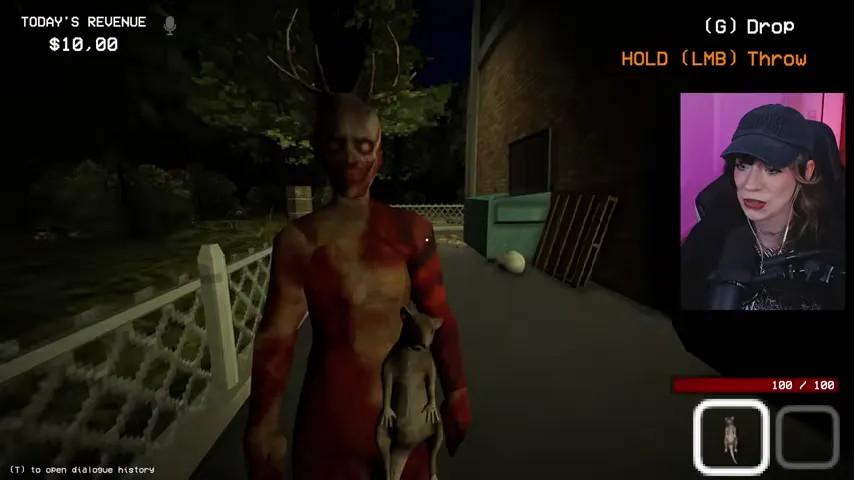
Carry the rat outside and use the throw control at the dumpster rather than leaving it elsewhere in the store.
10. Do not invent a link between ambiguous N.E.T. stories
Colin Shirley complains that Ryan submitted a resignation letter and says he hoped to confront him. Ryan earlier said his squad was wiped out, but neither statement proves that Colin belonged to that exact squad. In the reviewed run, Colin's weekly record still showed him Alive and employed by N.E.T.; his ID, appearance, and available answers did not create another contradiction. With no direct conflict tied to Colin, let him proceed instead of filling the story gap with an assumption.
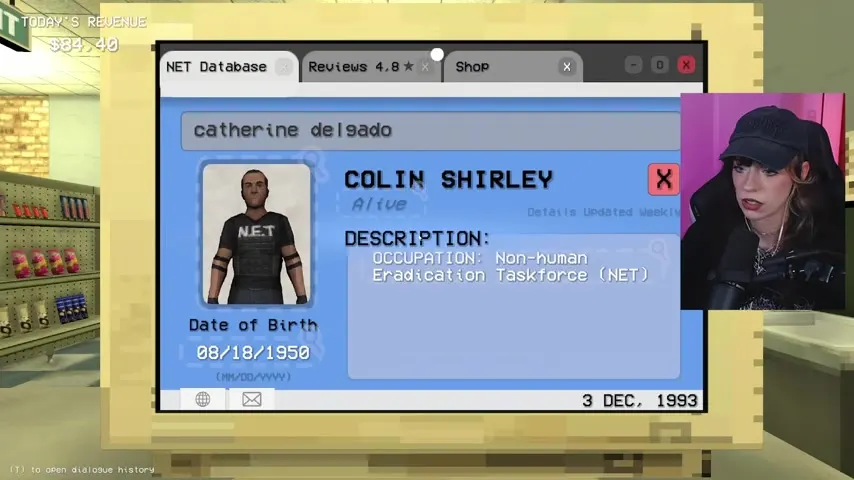
Two tense N.E.T. stories are not a contradiction until the current customer's evidence connects them.
11. Clean the whole store after the final customer
When the objective changes to "Your shift is done. Clean up any messes and head to the bus," stop interviewing and sweep the shop. Pick up trash and remains, mop every blood patch, inspect behind shelves and in the toilet area, and make a final pass for small pieces before taking the bus.
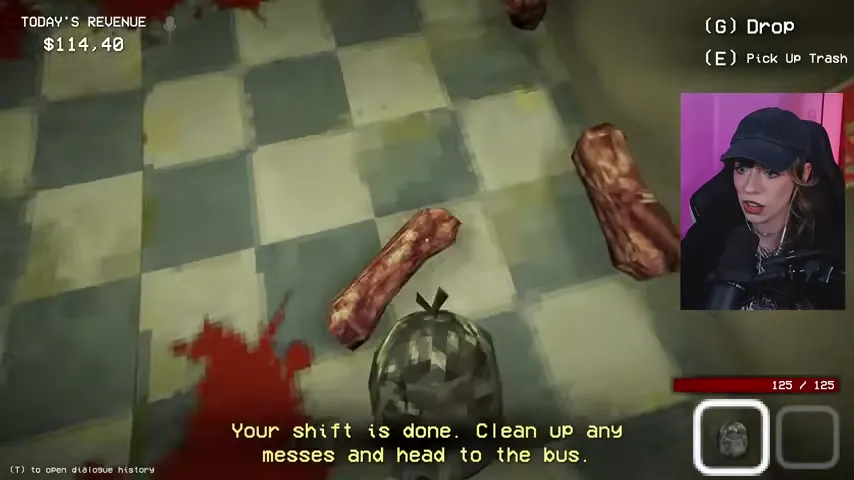
The closing prompt does not mean cleanup is complete; clear the remaining floor hazards before leaving.
12. Review the Night 3 report
The results screen reports the quota, store revenue, personal earnings, and whether any humans were killed. Values vary with performance, so use the report to confirm the quality of your decisions rather than expecting the same earnings shown here. A clean reviewed run showed No humans killed and Surpassed quota before the medicine choice appeared.
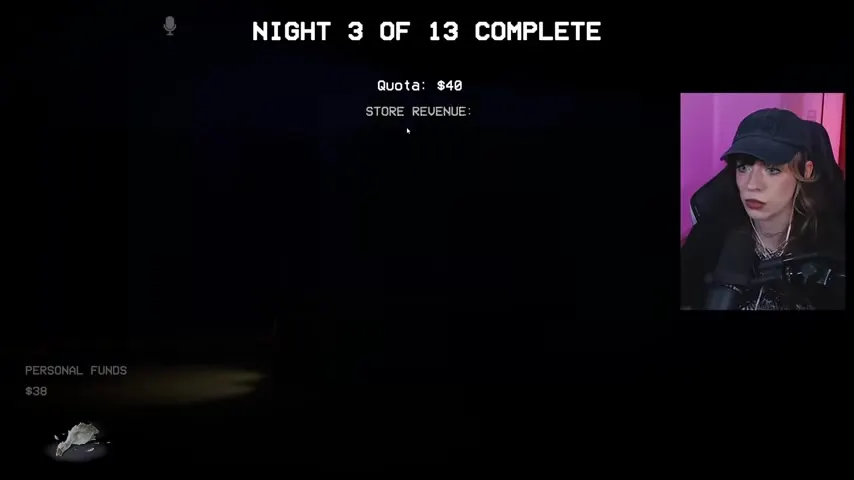
Check the human-kill and quota results before continuing to the bill.
13. Make the $40 medicine choice
After the report, a bill arrives for the next three days of medicine. It costs $40 from Personal Funds. Choosing Pay Bill ($40) removes $40, improves the pet's condition, and gives the pet enough strength to join the next shift. The pet's name differs between the two recorded saves, but the price and outcome are the same.
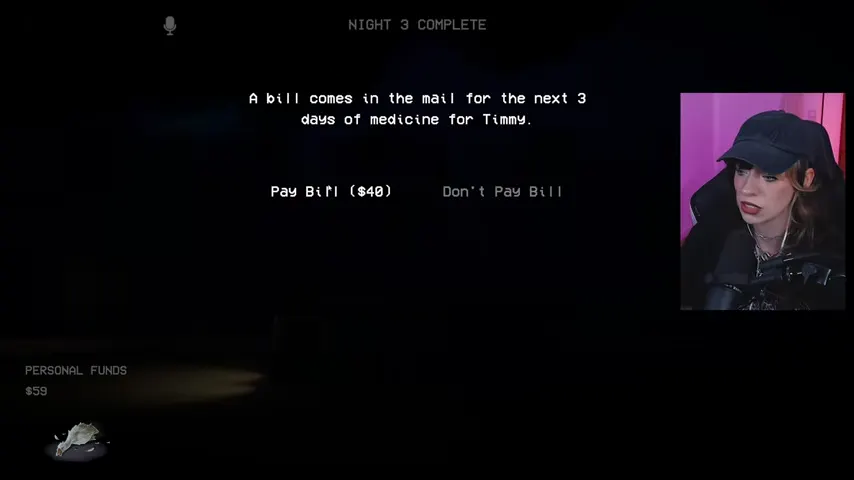
This is a separate personal-funds decision after the shift, not a Store Balance purchase.
Night 3 evidence order
When several demands overlap, repeat: remove an immediate floor hazard if safe → scan the ID → read the verified record → compare appearance and answers → search every named person → decide from a concrete contradiction → clean the resulting mess → catch any remaining rats.
Common Night 3 failures
- Shooting because the database portrait is blank instead of checking the remaining fields.
- Ignoring the computer date when a date of birth implies an impossible age.
- Treating an unusual but documented trait as proof of a doppelganger.
- Accepting a claim about a relative without searching that relative's exact name.
- Assuming Colin must belong to the same squad Ryan described.
- Leaving rats, blood, trash, or remains active while the store rating falls.
- Believing Store Balance purchases reduce the separate Personal Funds used by the medicine bill.
What carries into Night 4
Keep the fixed evidence order and turn every named claim into a database search. Night 4 begins with the consequences of the medicine decision and whatever optional defensive supplies you bought from Store Balance.
Chapter navigation